How to Build a Professional Agency Website Without Hiring a Developer

Most agencies and independent studios put off their own website the longest. You're busy building for clients, and your own site becomes the thing that never quite gets finished. Here's a practical path to a genuinely professional agency site, without hiring a developer or losing weeks to it.
Start with what actually converts, not what looks impressive
An agency website's job is simple, prove you can do the work, and get a visitor to book a call or send an inquiry. That means the temptation to build ten pages showcasing every capability usually works against you. A tight, focused site that clearly shows your best work and makes contact effortless will outperform a sprawling one every time.
Skip the custom build, start from a real design foundation
Building a professional site from a blank canvas takes real design skill, typography, spacing, color systems, responsive behavior, all the invisible decisions that separate a site that looks credible from one that looks like a template nobody customized. This is where starting from a well-built premium template pays off, you inherit those decisions already made correctly, and spend your time on the parts that actually differentiate you, your work, your voice, your positioning.
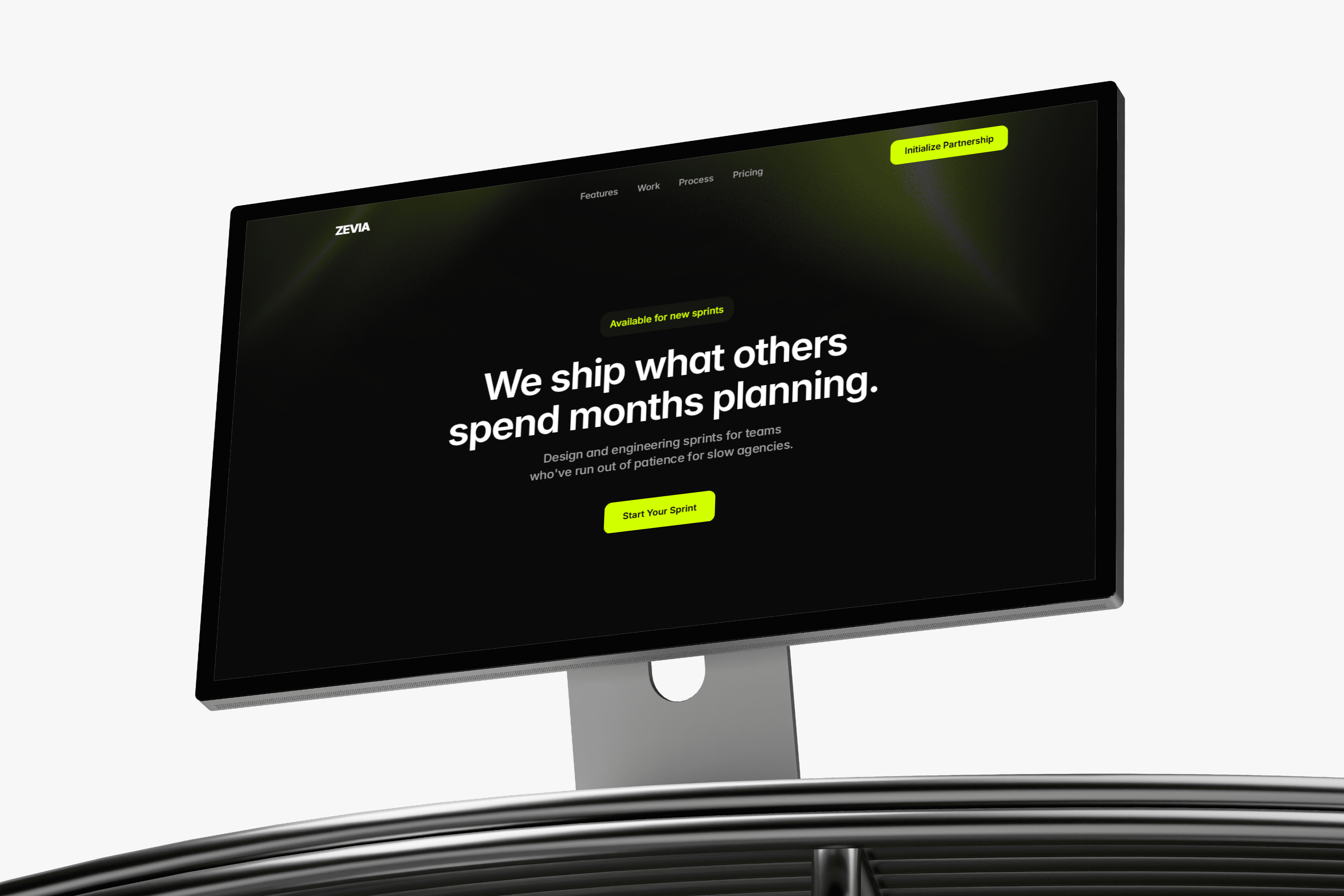
Zevia is built specifically for this, design studios, sprint agencies, and independent consultants who need a tight grid, clear conversion paths, and no bloated animations that slow the site down. It's free, so there's no reason to keep putting your own site off.
No-code means fast, not cheap-looking
The old assumption that no-code sites look generic doesn't hold anymore. Framer specifically handles hosting, performance, and responsive behavior automatically, which means the gap between a no-code site and a custom-coded one has mostly closed for marketing and portfolio sites. What matters now is the quality of the template and design system underneath, not whether a developer touched the code.
The actual steps
Pick a template built for your category, not a generic multipurpose one. Replace the placeholder copy and imagery with your actual work and voice. Keep the page count lean, more pages doesn't mean more credibility, it usually means more half-finished sections. Publish, then treat launch as the starting point, not the finish line, come back and refine copy and case studies as your work evolves.
A professional agency site doesn't require a developer or a six-week timeline anymore. It requires picking the right foundation and being disinterested in adding anything that doesn't move a visitor toward contacting you.